CampusPQ
A multimodal AI learning platform: document, image, audio and video pipelines with LLM analysis and semantic search behind them.
The problem
Study material does not arrive in one clean format. Students bring PDFs, photographs of handwritten notes, lecture recordings and video. A platform that can only read text handles a fraction of what people actually have, and AI inference over the rest is slow enough that a naive request-per-user design falls over as soon as more than a handful of students are working at once.
Approach
One pipeline per modality, one analysis layer
I built production pipelines for PDF, image, audio and video that normalise each input into a form the LLM analysis layer can reason over uniformly. Adding a modality means adding an ingestion path, not rewriting the intelligence on top of it.
Vector search for content discovery
Embeddings and vector search drive recommendation and content discovery, so a student's question finds related material by meaning rather than keyword overlap.
Async serving under concurrency
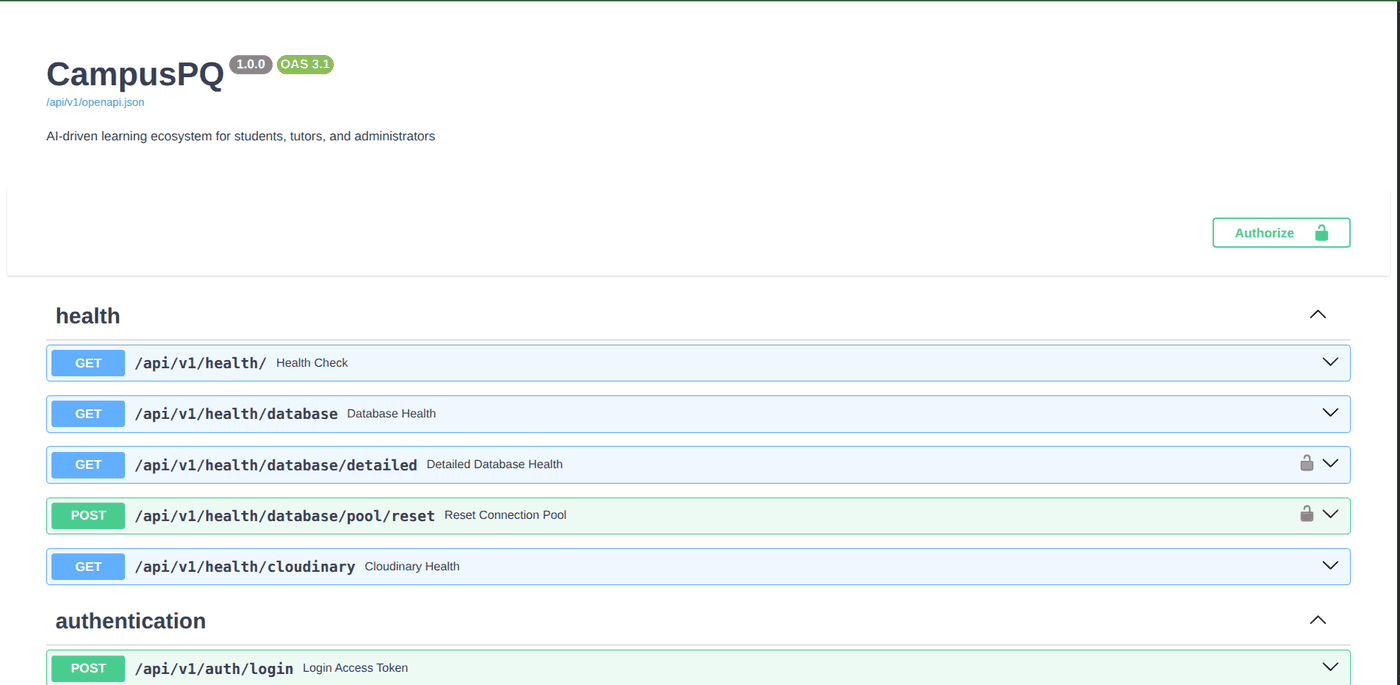
The backend is Python and FastAPI, designed to handle asynchronous inference requests while keeping a lightweight footprint, so response times hold as more students and tutors use the platform at the same time. Below is the live OpenAPI documentation for the service.
Operationalisation
Alongside the models sits the layer that makes them usable: REST and JSON APIs, performance tracking, automated testing and CI/CD. The platform scaled to over 5,000 processed questions at a 98% success rate — the failures worth chasing being malformed uploads and edge-case media rather than model quality.